

Precious plants
Another chance to vote (7 minute read)

You’ve had the chance to vote for your favourite invertebrate and your favourite bird, now here’s a chance to vote for your favourite native plant, kind of.
Since 2002, the New Zealand Plant Conservation Network has been running a competition for New Zealand’s favourite native plant. For the first two years, the pōhutukawa took the top spot, with other popular plants such as kowhai, kauri and tī kōuka/ cabbage tree close behind. Other well-known winners include the Chatham Island forget-me-not (2010), kauri (2012) and ngutukākā/ kākābeak (2023).
In other years, lobbying on behalf of more obscure species has heavily influenced voting. In 2005, the winner was an endangered coastal brassica, nau/ Cook’s scurvy grass. In 2013, the first fern to win was a small, hairy fern which almost always grows on the trunks of dead or dying kaikawaka/ mountain cedar trees. A tiny button daisy won in 2021, and in 2024 an endangered aquatic plant found only in a few Northland dune lakes took the title. Apart from pōhutukawa, the only other plant to win twice is its endangered cousin, rātā moehu/ Bartlett’s rātā. One of my personal favourites, the ongaonga or giant tree nettle was second in both 2009 and 2010, but has never won.
This year, the competition organisers have taken a different approach. Previously, voters have been able to choose from 6000 species of plant, lichen and algae1. This time, they’ve decided to narrow the field to 40 species which are coming under threat from climate change. Most of these have long been threatened, and climate change is making their situation even more precarious. Many are coastal species, which are at risk of having their habitat washed away by rising seas and storm surges.
Your personal favourite may not be there (no ongaonga for me to vote for), but there are certainly some fascinating plants on the list. Here is a selection which are worthy of your vote.
Kauri | Agathis australis
Most of the 40 candidates for favourite plant are likely to be unfamiliar to everyone except botanists, but there’s one standout exception. The mighty kauri tree is unmistakable to anyone who has spent time in our northern forests. There’s so much I could say about kauri, but I’ve got a whole article planned for some time in the new year, so I won’t go into any detail here.
The short version is that 99% of original kauri forest in Northland, Auckland, Waikato and Coromandel was logged in the 19th and early 20th centuries. Over the last few decades, kauri dieback has killed thousands of mature trees in the remaining forests. Climate change is expected to increase drought in areas where kauri forest remain, placing further stress on trees.
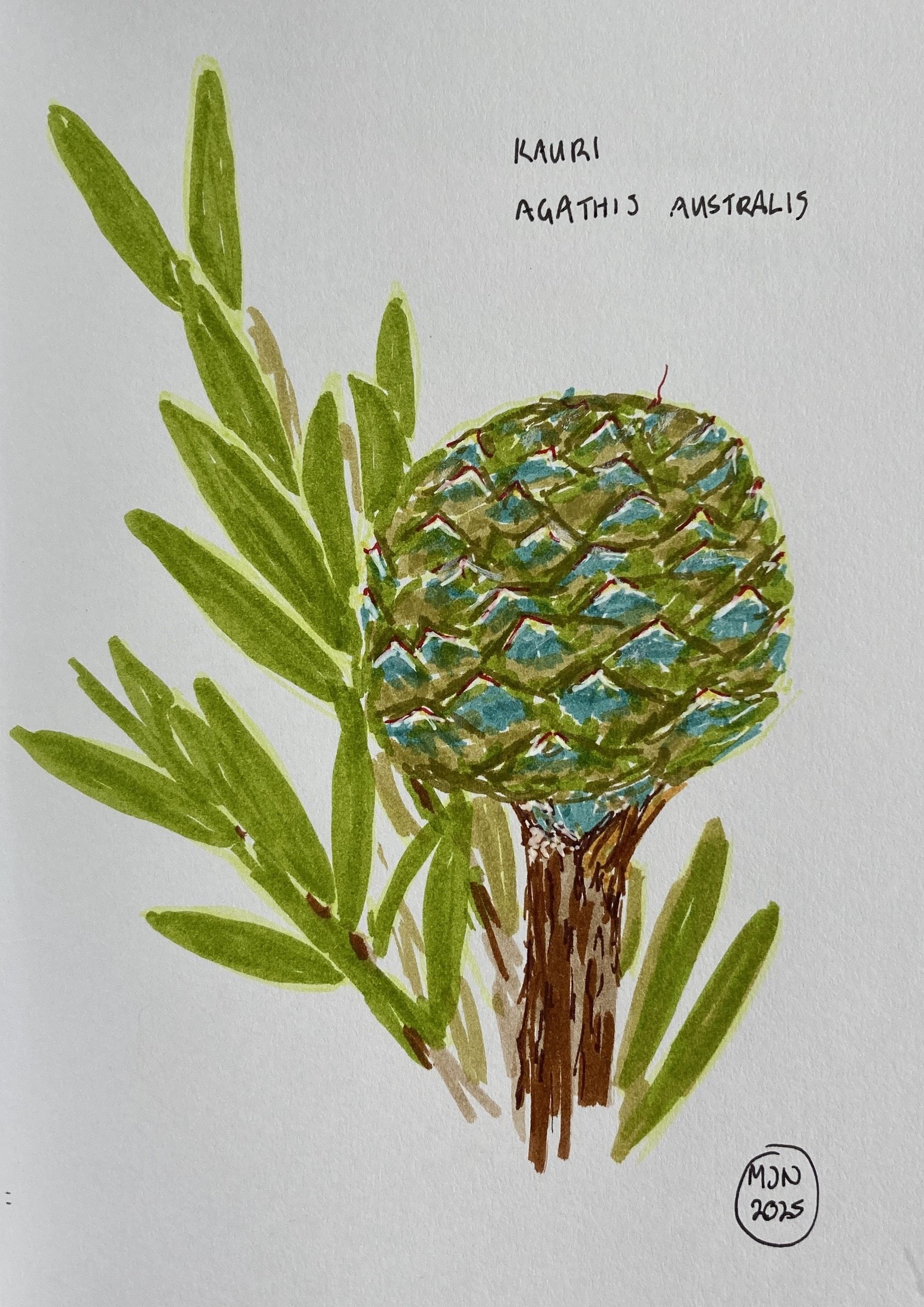
Why should you vote for kauri?
Kauri is an icon. It’s awe-inspiring. There are so many more reasons, but I’ll save that for my future article…
Pīngao | golden sand sedge | Ficinia spiralis
Pīngao is one of our most stunning shore plants. It grows on mobile sand dunes and its grassy leaves are coloured in shades of yellow and orange. Its creeping, underground stems help stabilise sand, but the introduced marram grass is replacing it in many areas. It also faces many other threats, including introduced mammals (both browsing and trampling), coastal development and damage to dunes by vehicles.
While climate change is listed as one of the threats to pīngao in the latest threatened plant assessment, there are no specific reasons listed. However, there are a couple of likely ways that climate change may affect it. The first is that rising seas and higher storm surges will encroach on its dune habitat. The second is that increased drought is likely to favour marram grass, which is more drought tolerant than pīngao.
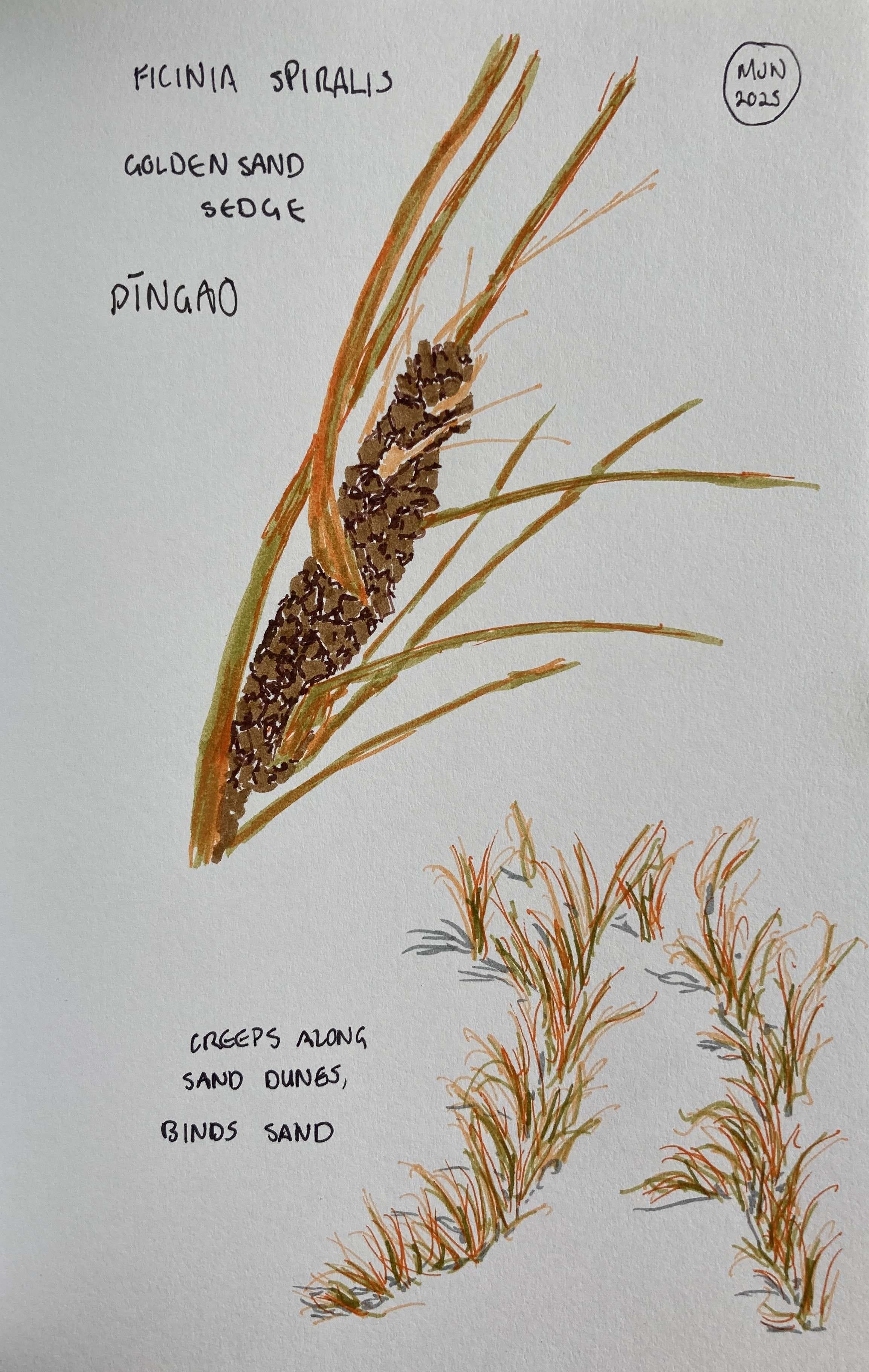
Why should you vote for pīngao?
I can’t go past the stunning orange colour of a patch of pīngao. However, there’s also its value in stabilising shorelines and for traditional Māori weaving.
Tātaraheke | sand coprosma | Coprosma acerosa
Tātaraheke is another coastal plant with a lovely orange colour. In this case, it’s the stems which are orange, while the green leaves are small and inconspicuous. The fruit are usually white, but plants from some areas have blue-coloured fruit.
It faces similar threats to pīngao, in particular rabbit browsing and coastal development. While its root structure make it effective for reducing erosion, it will be affected by rising seas and higher storm surges.
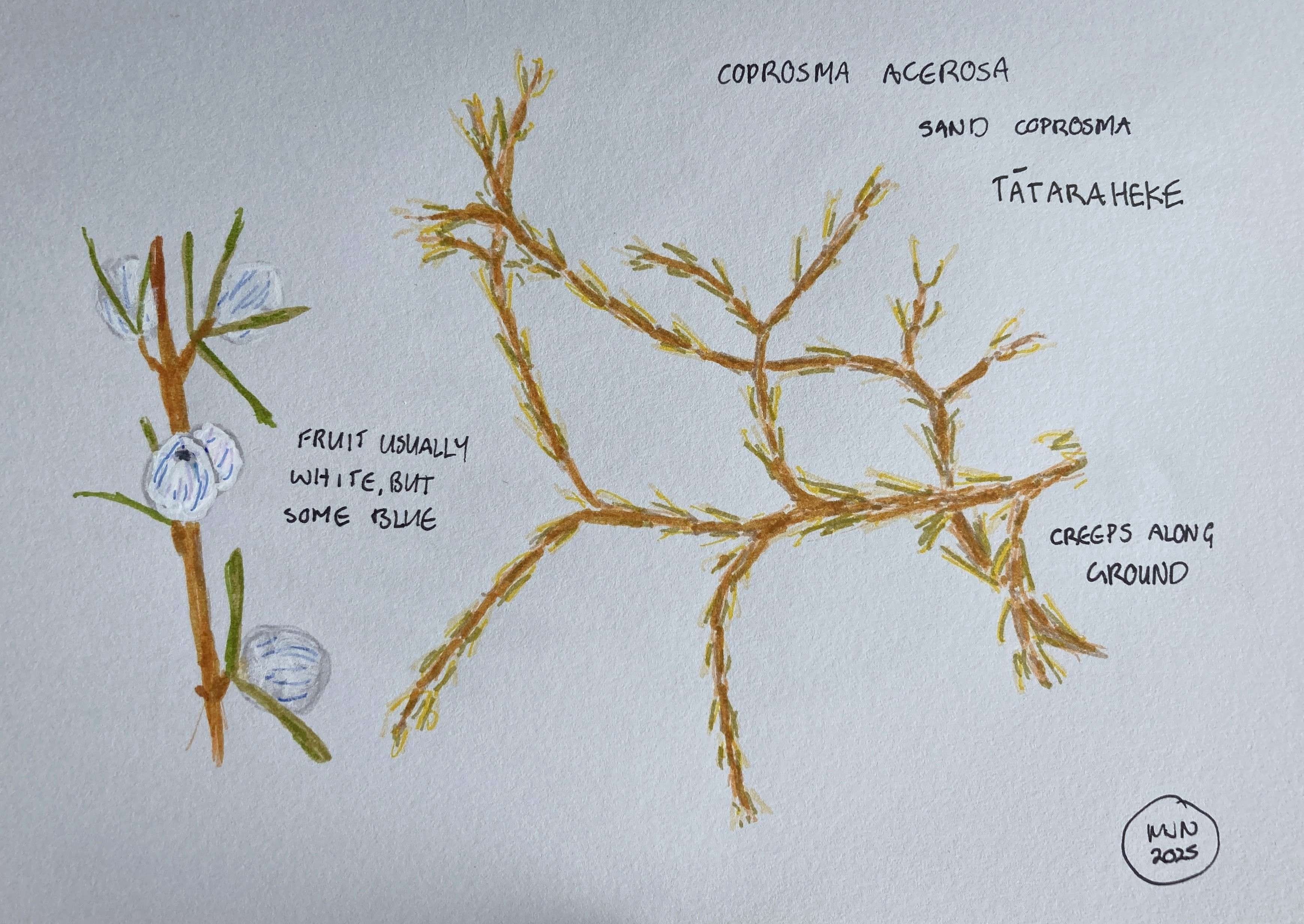
Why should you vote for tātaraheke?
While it’s at risk in the wild, tātaraheke has turned out to be a great garden plant, popular for growing over banks and retaining walls.
Nau | coastal peppercress | Lepidium banksii
When I worked for the Department of Conservation in Nelson, nau2 was a constant source of worry for the botanists who were responsible for threatened plants. It’s one of a number of related coastal cress species, all short-lived and relatively small, which were once abundant on our coasts, but are now rare and getting rarer. It also dies back to its roots over the winter, no doubt adding to the botanists’ anxiety.
I have a partially-drafted article about them, as well as some other related plants, so I won’t get into the threats here. The short version, though, is that everything wants to eat them, from wild pigs to the caterpillars of the cabbage white butterfly. Since they are coastal, sea level rise will add to the threats they face.
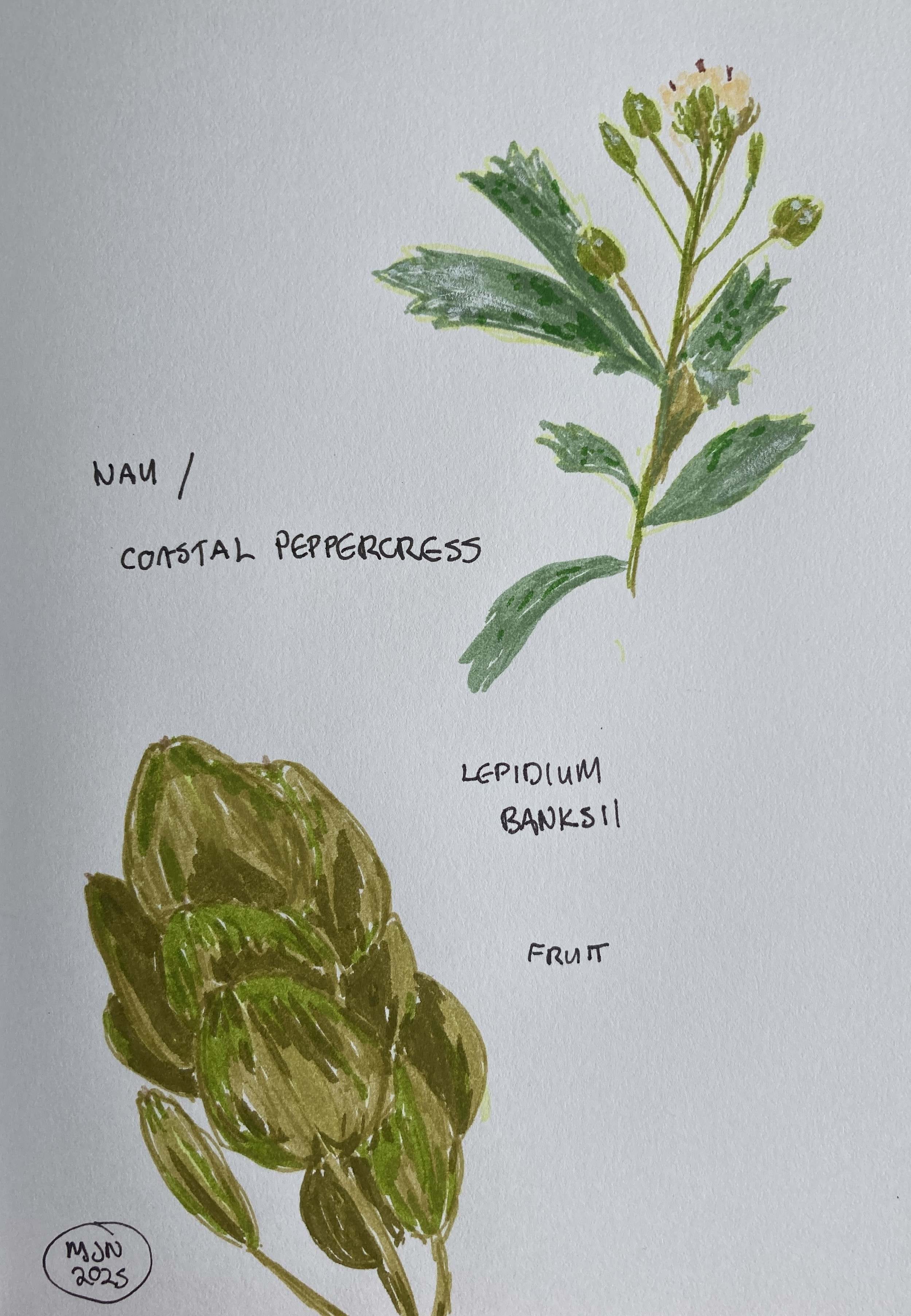
Why should you vote for nau?
Nau is one of the species collected by Captain Cook for use as a fresh vegetable, to prevent scurvy among his crew. It could be used as a vegetable if it wasn’t so tricky to cultivate.
Puatea | Kaitorete Spit woollyhead | Craspedia thinicola
I have a fondness for puatea3 plants, with their soft, hairy leaves and odd flower heads. The individual flowers are tiny, and they are packed densely together at the end of a stalk, giving the appearance of a soft drum mallet. I particularly like this species, because it’s found only in one of my favourite places, the windswept Kaitorete Spit south of Christchurch.
There’s limited information about the threats, but being unique to a single small area of coast already puts this plant at a disadvantage. Sea level rise will make it even more vulnerable.
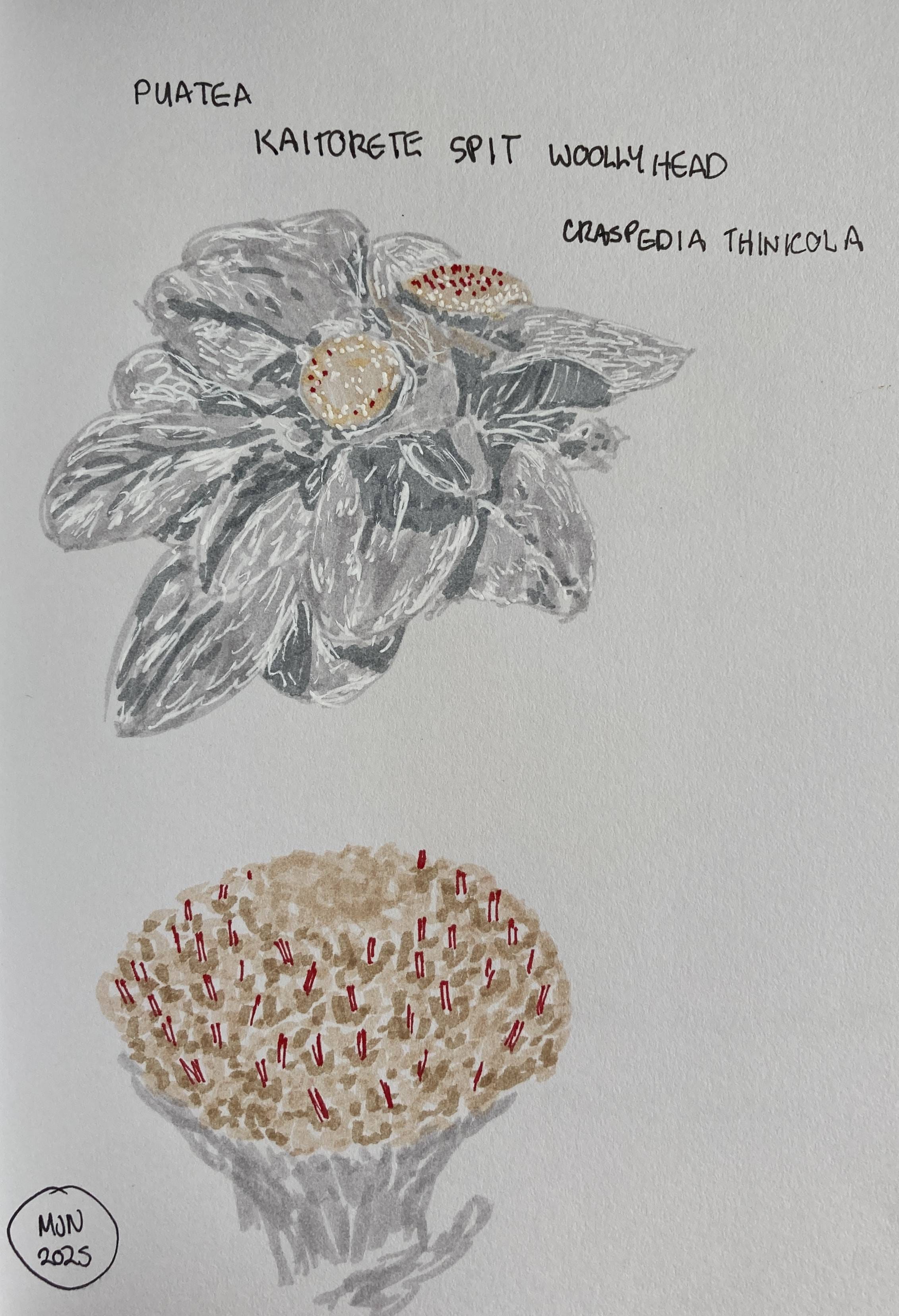
Why should you vote for puatea?
It’s just so cute and fluffy!
Riverbed forget-me-not | Myosotis uniflora
As the common name suggests, this plant is related to our garden forget-me-nots, but you’d be forgiven if you were sceptical. Instead of the typical forget-me-not blue, it’s bright yellow. The plants grow as dense cushions, again, looking most unlike any of its relatives.
Its riverbed habitat is frequently invaded by weeds much taller than the forget-me-nots, and river edge areas where it grows are also increasingly being used for viticulture. I haven’t found specific information on why it is considered to be threatened by climate change, but increased intensity of extreme rainfall is likely to mean larger floods. Weed invasion and climate change are expected to interact, leading to significant alteration of many rivers.
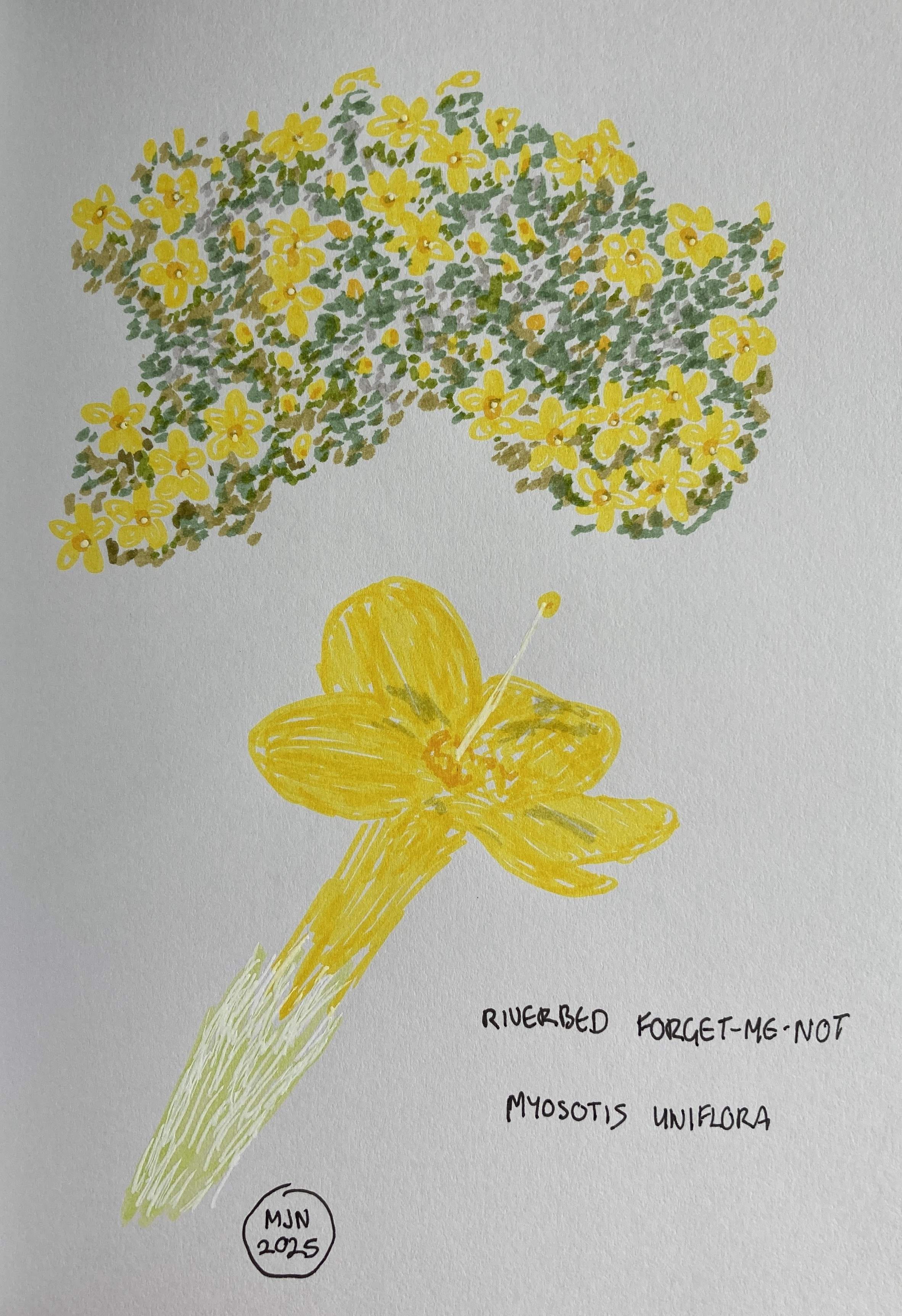
Why should you vote for riverbed forget-me-not?
This plant’s a real rebel, flouting all the forget-me-not rules and being itself.
Vote for riverbed forget-me-not
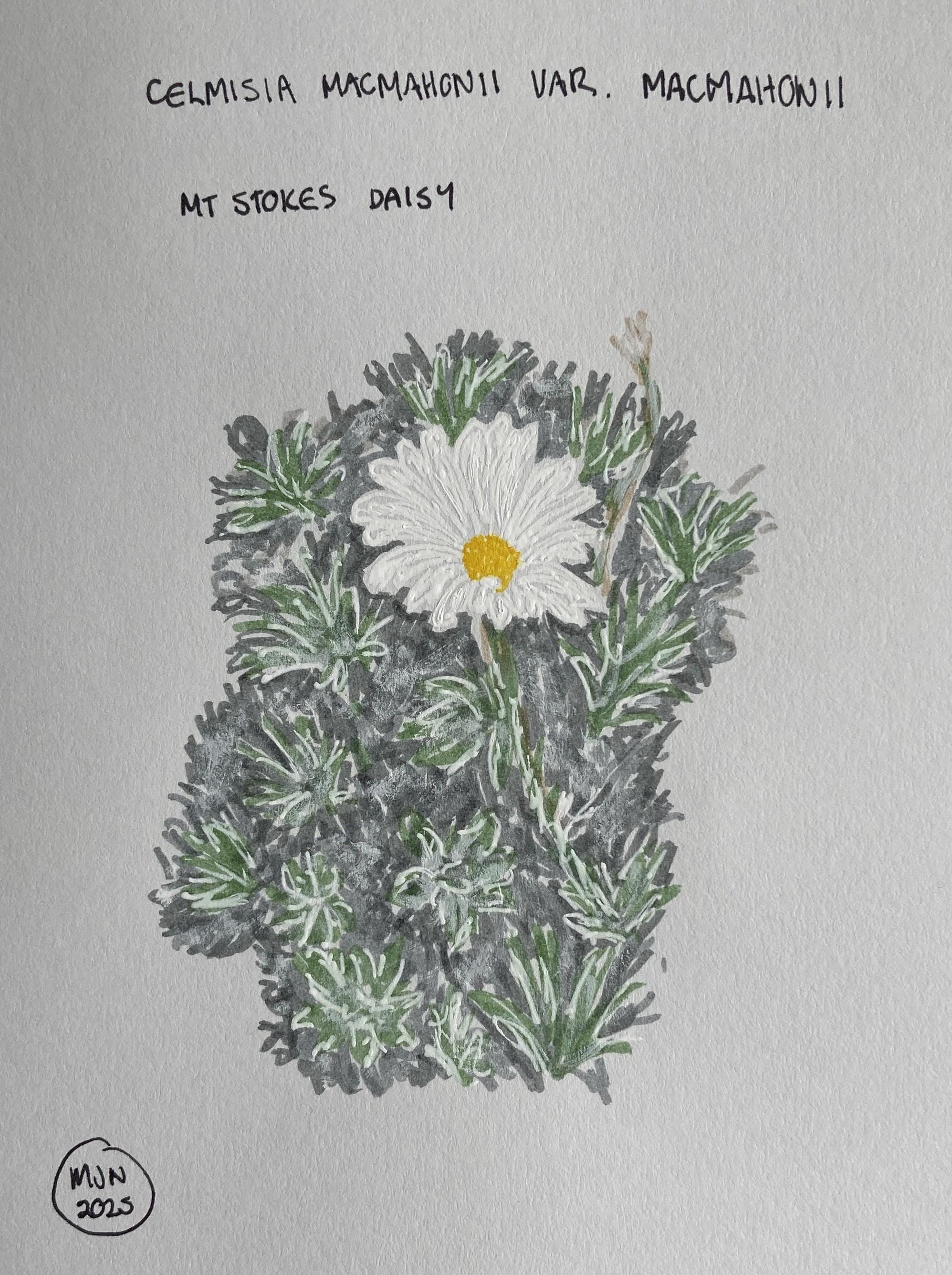
Mt Stokes daisy | Celmisia macmahonii var. macmahonii
The Mt Stokes daisy4 is one of New Zealand’s beautiful mountain daisies, a distinctive feature of our alpine areas. Their narrow, silvery leaves make them stand out, while their flower heads leave you in no doubt that you’re looking at a daisy, with a sunshine-yellow centre surrounded by white rays.
This particular variety is found on only two isolated mountains, Mt Stokes and the nearby Mt Macmahon in the Marlborough Sounds. The main threats are goat browsing and being confined to a very small area. But climate change alone may wipe it out.
Climate change is going to play havoc with alpine plants. If you look at images of our mountains, there’s a very obvious line where the trees end and tussock grasses begin, known as the treeline. The image below [I will add this later] shows the treeline from two angles, to the left looking at the treeline from above, and in the distance showing the forest in dark green and the grassland in pale greenish-brown. The treeline is determined by temperature, so it’s going to shift higher as the climate warms. Low-growing alpine plants will also need to spread to higher altitudes if they are to survive.
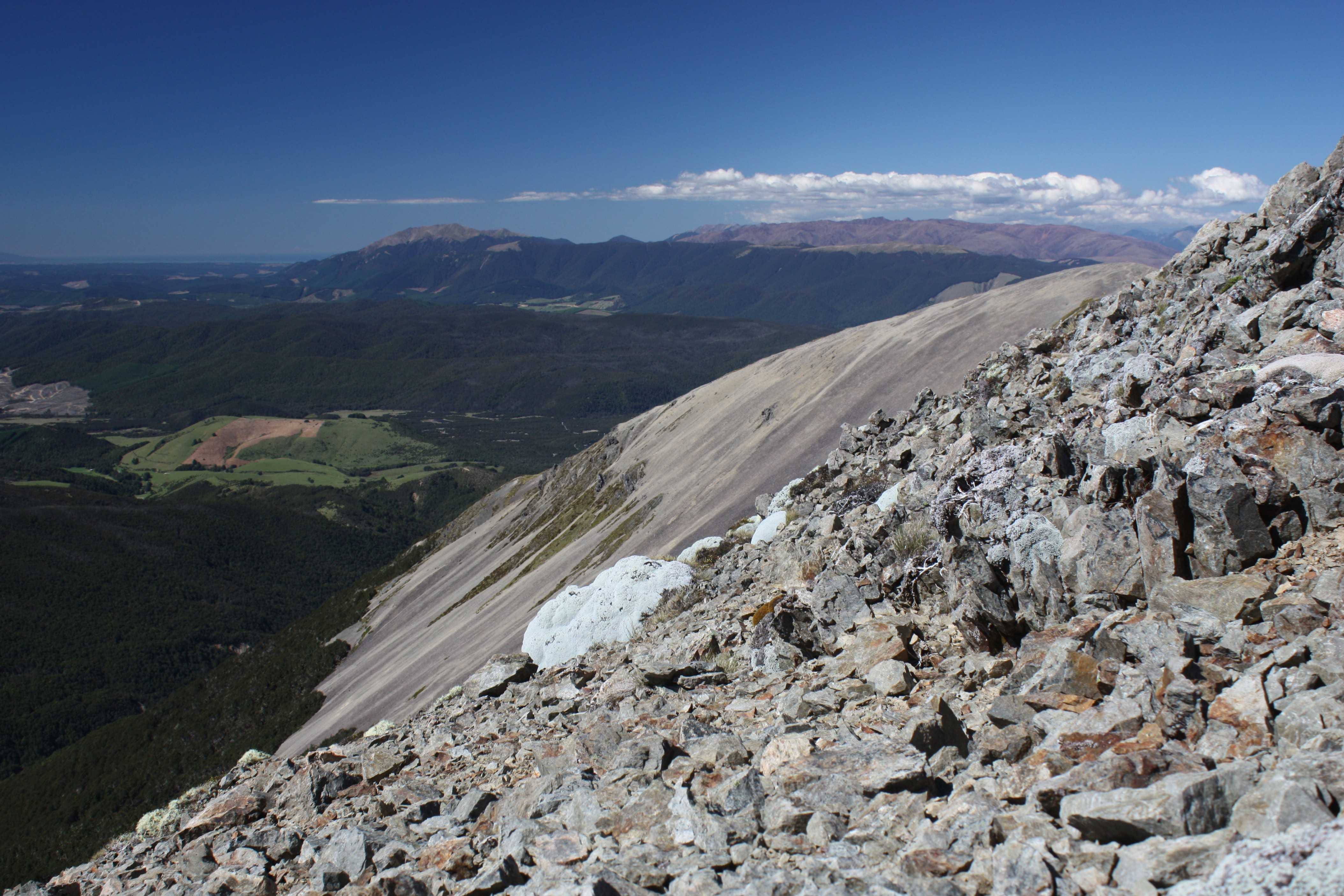
Unfortunately for the Mt Stokes daisy, it has nowhere to go. It’s already growing at the highest point of the Marlborough Sounds and there are no higher mountains for miles. If the treeline rises, its habitat will vanish.
It’s not alone either. Dozens of alpine plants are unique to small “islands” on isolated mountain tops and are now under threat. I really should take a closer look at the issue, because it’s an aspect of climate change I haven’t really explored. That’s for another day.
Why should you vote for Mt Stokes daisy?
There’s something immensely sad about this lovely daisy clinging to a mountaintop as its only home disappears.
There are many other lovely, deserving candidate plants, so check them out at the link below.
Green algae are considered to be plants, but many kinds of algae, such as kelp, are no longer classed as plants.
Most sources list nau as being the name for another coastal cress, Lepidium oleraceum, and there isn’t usually a Māori name given for L. banksii. However, nau is a name used in several different Pacific languages for different coastal cress species. Given that botanists have varying views on the names and boundaries between the different coastal cresses, it seems reasonable to use nau for this species in the absence of an alternative.
Puatea is a generic name for woollyhead plants. It’s possible that there’s a specific Māori name for this species but it’s not recorded in the sources I looked at.
There are a number of different Māori names for different Celmisia species, but I haven’t been able to find one which applies to this species.
Another wonderful Turnstone, Melanie - thank you! Several of my favourites, including pingao and tātaraheke, which the Kāpiti Coast Biodiversity Project may have saved from extinction in Queen Elizabeth Park, thanks to Stephen Whitton. I agree with Krista and would love to see one of the mistletoes on the list. Next time!
My son works at Brook Waimarama sanctuary. He just gave a talk on our native Mistletoe which I know he would love to be on the list!
I share your articles with him. Really enjoy them.