Flying colours
Meet the style icons of the moth world (2 minute preview, 4 minute full article)

The first thing most people notice about me is my fondness for bright colours. In a city where the public service and corporate uniform is black, I’d turn up to the office in lime green, orange or turquoise, or perhaps all three together. I don’t even own a pair of black or brown shoes, and my handbag is a colour only I consider neutral – bright orange.
It’s no surprise then, that I’m delighted by the moths which eschew the greys and browns favoured by so many of their cousins, and fly on wings of yellow, orange, pink and green1. I love drawing these moths. They bring me joy. I wanted to share this joy and offer a brief reprieve from the constant bad news.
So, get ready for a moth fashion parade. Sporting wings as bold as any butterfly, these moths are dressed to impress. Join me in admiring the latest in lepidopteran fashion2 as they strut down the runway (or perhaps should I say flap down the flyway).
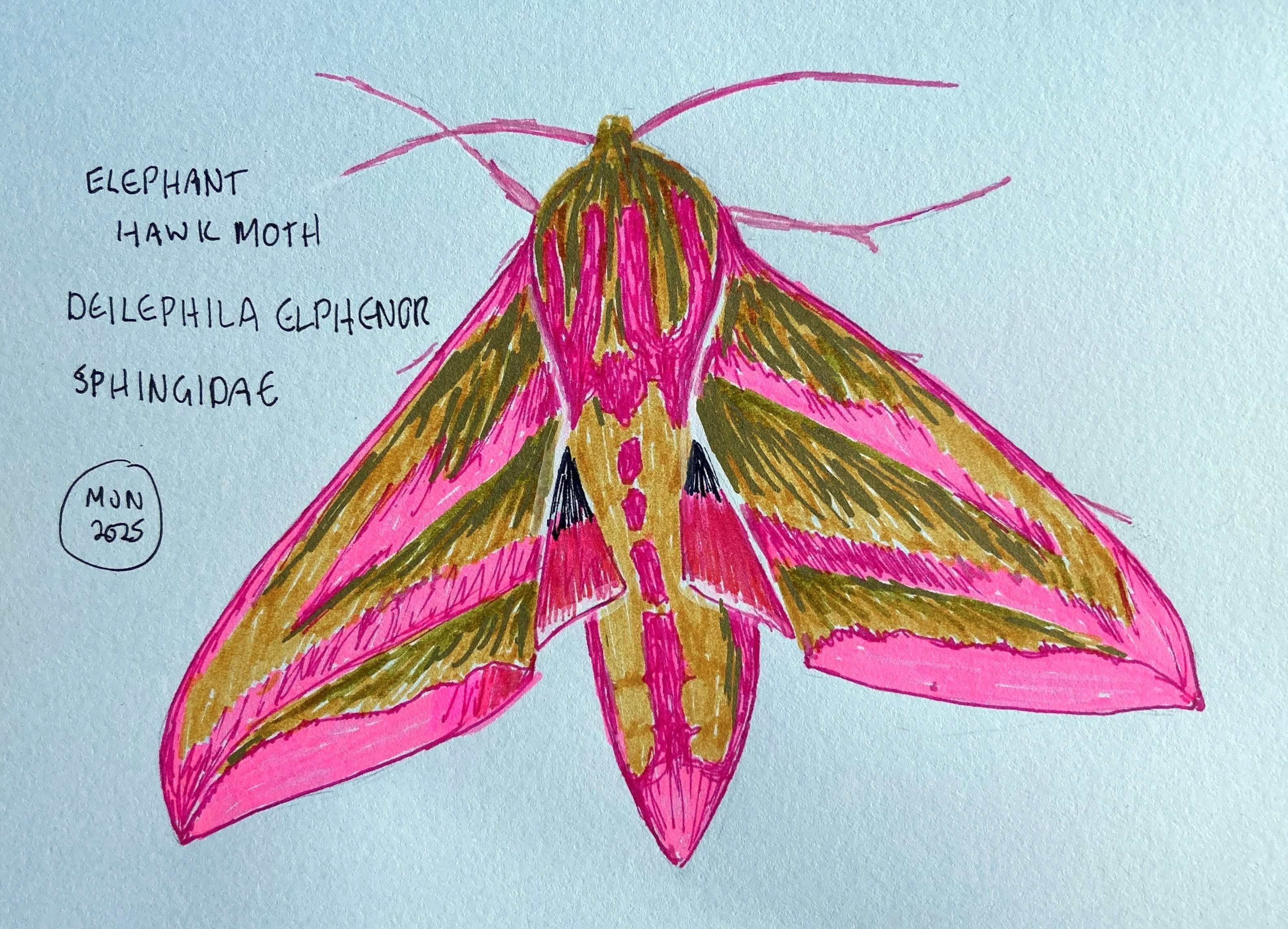
Elephant hawk moth
Wearing a colour combination sure to attract attention, the elephant hawk moth stands out wherever it flies. Its streamlined wings are striped in pink and olive green, matched with pink antennae and legs. If it gives you a flash of its body, you’ll see that it’s coordinated right down to the olive and pink hairs on its abdomen. It flies in the skies of Europe and central Asia, all the way to China, Korea and Japan, and it recently made the move to Vancouver. It enjoys nectar from flowers, and its caterpillars feed on plants in the evening primrose family.
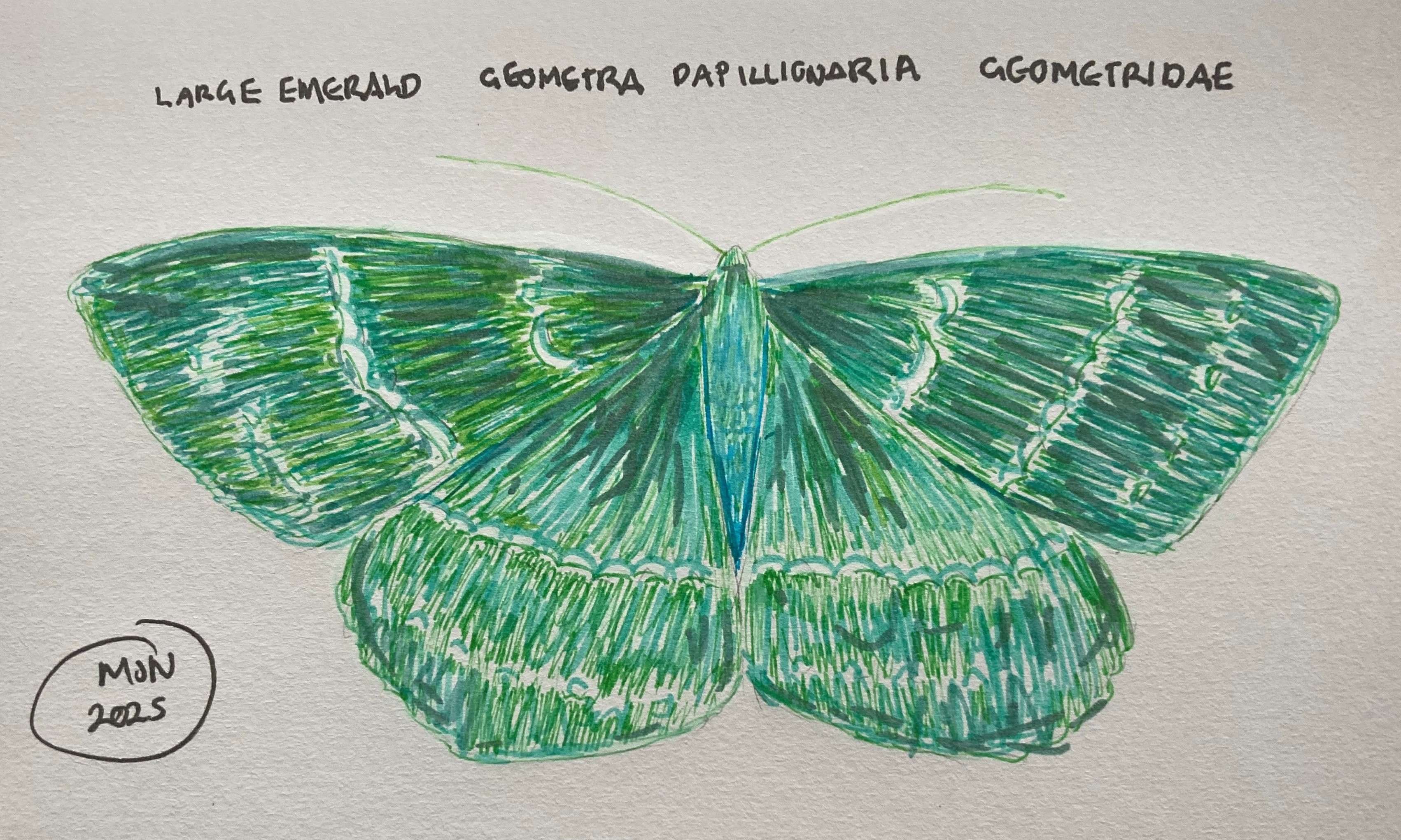
Large emerald moth
With its distinctively patterned green wings, the large emerald moth moves effortlessly from daytime, where it rests unnoticed among the leaves, to the hot summer night. It coordinates its ensemble with a matching green body, and even has a matching green chrysalis before emerging into its adult glory. The large emerald moth flies at night in Europe and Asia, all the way to the fiery Kamchatka Peninsula. It dresses down in the winter, surviving as a reddish-brown caterpillar hidden among the leaves on the forest floor. When it emerges in spring, it changes to green, matching the birch leaves it feeds on.
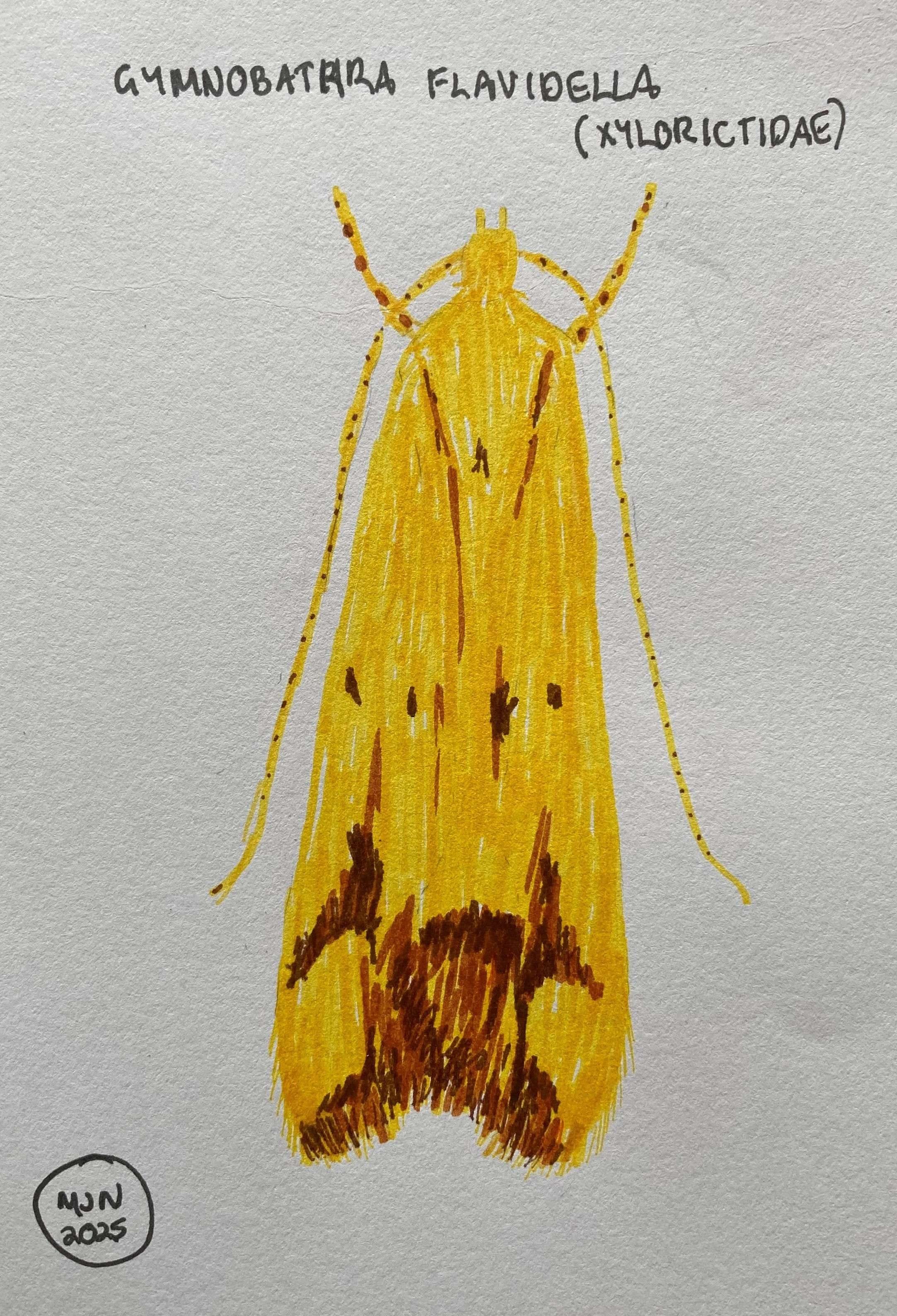
Pink-tipped yellow moth
It might be tiny, but this moth is sure to stand out, clad in shades of yellow, accessorised with a red-brown fringe and patterns on its wing tips. Don’t be fooled by its bold colour, because this moth is shy and enigmatic. So far its caterpillars have only been found dining in dead stems of rangiora and one of our giant sedges – two completely unrelated plants. This mysterious moth is found nowhere but New Zealand.