

Toxic legacy
The poison which renewed hope for New Zealand’s endangered species (14 minute read)

I’ve visited Rangitoto, the distinctive volcanic island visible from any high point in Auckland, many times in my life. My earliest memories of walking there are of the heat radiating from the dark scoria rock and the effort of dragging myself up to the summit. As a teenager, I remember swimming in the tidal swimming pool built by prison labour in the 1920s. As a university student, I investigated the plants and learned how difficult it was to move about on the savagely sharp scoria. Around ten years later, when I was reviewing the island’s weed management programme, I remember wearing heavy leather gardening gloves when I walked off the track. It meant that if I stumbled and steadied myself with my hands, they wouldn’t be cut on the rocks.
On my most recent visit, in 2024, I remember noticing a change in the island. It looked very similar to when I’d last been there 20 years ago, but it didn’t sound the same. I could hear birdsong. As I walked along a stretch of track on the lower slopes, I heard a familiar call which I describe as like hysterical laughter. I stopped and looked across to where the call had come from, and among the trees I saw a flash of brown. The bird hopped and scrambled among the branches of a pōhutukawa tree, then called again. It was a tīeke, a bird which I know well from visits to fenced sanctuaries such as Zealandia and islands such as Tiritiri Matangi, but which cannot coexist with many of New Zealand’s introduced mammals.
Twenty years before, no tīeke would have stood a chance of surviving on Rangitoto, where there were stoats, feral cats, rabbits, hedgehogs and mice as well as all three rat species1. But since then, it’s become one of over 100 islands around New Zealand which have been cleared of rats and other invasive mammals. One tool, in particular, has become an essential part of rat eradication and island restoration, not just in New Zealand, but around the world. It’s a poison named brodifacoum and its story illustrates some of the challenges and difficult decisions which need to be made in protecting New Zealand’s native species.
I spend most of my time in a bubble where everyone agrees that rats must be killed for conservation. I’ve seen what a successful eradication can achieve. Even so, if I step back and give it more thought, it’s a shocking idea, that conservation should involve scattering poison from helicopters over sensitive environments containing rare species. Doesn’t this risk harming those rare species? Are there other impacts of the poison? Is it really worth it?
Before I answer these questions, though, there’s another question which needs to be answered: what does eradication actually mean?
Eradication is a word which originally comes from weeding, and means to pull out a plant by the roots. The common English usage now is similar to exterminate: not just uprooting a single plant but killing large numbers of any kind of species, plant or animal. In scientific circles, however, it has a more precise definition. When referring to invasive species, as well as diseases such as smallpox, eradication means the removal of a species from a defined area with little or no chance of reinvasion. It’s distinct from elimination, which New Zealand managed to achieve with COVID-19 for the first 18 months of the pandemic, because elimination acknowledges that the species or disease will continue to arrive.
Exactly what little to no chance of reinvasion means, though, is open to some debate. Killing every rat in an unfenced forest on mainland New Zealand clearly wouldn’t be eradication, as nothing would stop rats coming in from the surrounding area. On the other hand, rats aren’t going to swim to Campbell Island, more than 500 kilometres south of New Zealand, and the nearest rat populations. Even then, though, a chance remains. Rats could still arrive from a shipwreck, although the chances of that are vastly less than they were in days of sailing ships. Or perhaps a boat in distress could pull into one of the more sheltered inlets and rats could swim ashore. In reality, there is always some chance of reinvasion after eradication. It’s simply a matter of judgement whether that chance is small enough to make an eradication worthwhile.
For many decades, even as conservationists were coming to appreciate the impact of rats, there was a widespread belief that nothing could be done. They were too small and wily to be shot like rabbits, goats, feral cats or even stoats. Trapping was extremely labour-intensive for the large numbers of rats which were sometimes present. And rats are difficult to kill with poisons, because they approach new foods with extreme caution, nibbling only a small amount and then avoiding the food in future if it makes them sick. As a result, they rapidly develop aversions to toxic baits.
The tide began to turn in 1959, when a group of volunteers tried a new kind of rat poison in an attempt to save a breeding colony of a tiny seabird, the takahikare, which was being devastated by the recent arrival of rats on Maria Island in the outer Hauraki Gulf. The new poison was warfarin, the same compound used (in low doses) as a blood thinning medication. Warfarin was developed by altering a naturally occurring toxin which was discovered when cattle on the American prairies began dying after eating mouldy hay in the 1920s. The poison was particularly effective on rats because its delayed action meant that rats didn’t associate their illness with the toxic bait they had eaten.
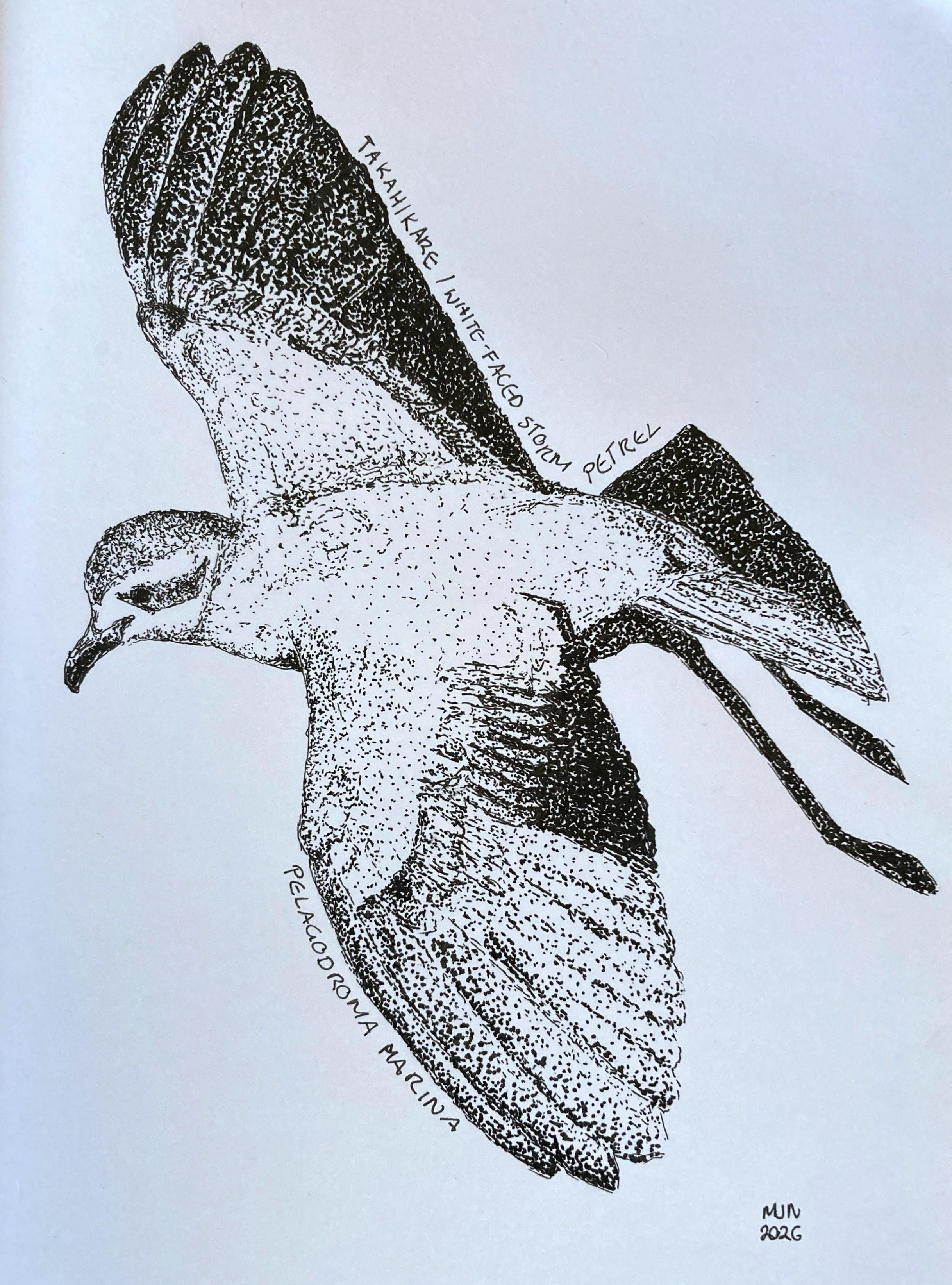
The volunteers laid Warfarin bait on Maria Island sporadically from 1959 until 1964, in the hope of reducing rat numbers enough to save the seabird colony. Instead, they found that the rats were completely gone.
The apparent success on Maria Island didn’t change the widely held views on rat eradication, though. After all, it was only a one hectare island, and just because one event follows another, it doesn’t always mean that the first event caused the second. But the poison seemed to work well enough and didn’t harm the seabirds, so the poison was tried on other islands, such as Tītī Island in the Marlborough Sounds. There was no expectation of eradication. The goal was to reduce rat numbers during the breeding season, but the results were better than expected. Again, the rats were completely gone.
By the late 1970s, scientists were starting to realise that eradication might be achievable, and began experiments on small islands. The largest of these was Tawhitinui in the Marlborough Sounds, 21 hectares in size. Rather than warfarin, they used related but stronger poisons, referred to as second generation, since they are newer. The most widely used of these is brodifacoum. Because the second generation poisons were more toxic, rats could be killed by the amount they would eat in a single feed, increasing the chance of a successful eradication. But they came with a greater risk of poisoning other species. On Tawhitinui, for example, there were curious weka who sampled the bait and were killed.
Although some native birds were killed, the experiments proved that rats could be eradicated. Then, attention turned to islands which were more important for conservation. Some of these islands had the potential to provide rare birds with much larger areas of habitat than they had on other island refuges. For example, once rats were eradicated from Breaksea Island in Fiordland, it was able to support large numbers of South Island tīeke, mohua (yellowhead) and endangered weevils.
Others held endangered species at risk of dying out if the rats remained, such as a series of small islands near Ahuahu or Mercury Island, east of the Coromandel Peninsula. These had a species of wētā found nowhere else, rare lizards and numerous seabirds. Although the islands had kiore, small numbers of tuatara also still held on. Tīeke, once confined to a single island off the Northland coast, had been released on the islands and had established despite the presence of kiore.
Because these islands had more native species present, there were more species at risk from the poison. There were so few tuatara left on the islands that the scientists decided to remove them all and keep them in captivity for the duration of the eradication. In fact, the tuatara did so well in captivity that more were returned to the islands than were removed. However, some of the birds fared less well. After one eradication, five tīeke and a ruru (morepork) were found dead, the tīeke from eating bait directly and the ruru most likely from eating a poisoned kiore.
These deaths raise two important points about island rat eradications using brodifacoum. The first is that brodifacoum is particularly persistent in the environment and can remain in the bodies of dead animals for long periods of time, leading to what’s known as secondary poisoning. Whether this is a good or a bad thing, though, depends on what is poisoned. Nobody involved with the Ahuahu eradications wanted ruru to be killed. On the other hand, if stoats are killed, secondary poisoning may be considered beneficial, in New Zealand at least. When it comes to cats, it depends where the operation is done and whether the cats are pets or feral, and even then people don’t always agree. This is one reason why eradications are much more difficult on inhabited islands. But that’s a very different situation, which I haven’t got the space to cover this week2.
The second point I wanted to raise about island rat eradications is that these are not operations where the poisoning needs to be repeated over and over again. Those who make decisions about eradication have to consider the risk of killing some native birds (or reptiles) during a one-off operation against the ongoing impacts of the rats3. On the small islands near Ahuahu, the numbers of tīeke killed weren’t enough to dent the overall population. On the other hand, with only a few tuatara remaining on the islands which had kiore present, any losses could be catastrophic, which is why they were moved away for the eradication.
The Ahuahu eradications pioneered the use of helicopters for island rat eradication, meaning that larger islands with more difficult terrain could be tackled. The eradication of brown rat and kiore from Kāpiti Island north of Wellington was one such operation. Because the island also contained more forest birds, including tīeke, weka, kākā, ruru, two species of kiwi and toutouwai (North Island robin), the risks were much greater. Some weka and toutouwai, considered the most vulnerable, were removed from the island as a backup in case too many were killed. The rat eradication did kill significant numbers of native birds, leading to a decline in several species. However, even the hardest hit birds, weka and toutouwai, rebounded quickly. The most endangered birds on the island, such as tīeke and hihi, immediately showed improved survival in the absence of rats.
The recovery shown by both animals and plants following rat eradication led to a surge in eradications through the 1990s, with larger and larger islands being tackled. This culminated in the eradication of brown rats from the 11,300 hectare Campbell Island, more than 500 kilometres south of New Zealand in the wild southern ocean. Campbell Island is four times larger than Kāpiti and three times larger than Langara Island on Canada’s west coast, which was the largest successful eradication at the time. In 2001, a team of 19 people travelled south and lived on the inhospitable island for six weeks. With helicopters guided by GPS, they dropped a staggering 120 tonnes of brodifacoum bait on the island4. And then they left.
Because Campbell Island is so remote, it couldn’t be monitored with the intensity of eradications such as the islands near Ahuahu or Kāpiti. The crew which had conducted the eradication simply had to wait. It must have been agonising, walking away from such a massive operation without any way of knowing whether it had succeeded or not, or whether the poison had resulted in unintended deaths.
I’ve written before about the results of that operation, but some of them bear repeating here. Most remarkable was the response of the Campbell Island snipe, the little bird which had held on for 180 years on a 20 hectare islet just to the south of the main island. It seems as if that little bird was just waiting for someone to come and save it with 120 tonnes of rat poison, because when the crew returned two years later, they found footprints in the mud showing that the snipe had returned to Campbell. A couple of years later, on another visit, scientists found a juvenile bird, confirming that the birds were home and they were breeding.
The use of brodifacoum in this way – broadcast over large areas from helicopters – is confined to remote islands for eradication purposes. The point of eradication is that control is a one-off event, but it uses a lot of poison and comes at considerable cost. There are financial costs, of course. The Campbell Island rat eradication cost $2.6 million. There are environmental costs, too. In the quantities used for island eradications, it does kill other animals. And we have to consider the rats themselves. Poisoning with brodifacoum is one of the least humane ways to kill rats.
Brodifacoum is also used on mainland New Zealand, in fact you can buy it at a hardware store. The quantities used are smaller than for eradication, and it is delivered from bait stations to limit access to other animals, but there are still risks. It can persist for months in the tissue of animals which eat less than a lethal dose. While it doesn’t enter the water, it also persists for months in the soil before being broken down. Repeated use can lead to it accumulating and poisoning species which were not the target of poisoning. It’s toxic to humans as well, and a European Union assessment indicates that it is also likely to cause birth defects. On uninhabited islands, the only human health consideration is protecting those applying the poison. But where people are living, it requires much more care.
If brodifacoum is so harmful, why is it widely available at all? As far as I can tell, this is largely because it’s less dangerous than many alternatives. It’s a slow acting poison and there’s an antidote available (Vitamin K1), so effective treatment is possible. However, there’s currently a review on the rules for brodifacoum sale and use in New Zealand. Among the proposed changes are a reduction in the amount which can be sold to the public and improving bait stations.
The fact that we drop large quantities of poison for conservation purposes is an uncomfortable one for most people, myself included. But there is also no doubt that it’s saved species from extinction. We have eradicated rats from Whenua Hou, where the kākāpō are currently breeding, from Tiritiri Matangi, where many thousands of people have seen rare birds and from Taukihepa, where ship rats once drove two birds and a bat to extinction. The Campbell Island snipe and teal are now living on the 11,300 hectare main island instead of a couple of tiny islets. Native birds, reptiles, insects and plants are increasing on Te Hauturu-o-Toi (Little Barrier Island), including one bird which was believed to be extinct. And people are now able to see many of these rare species for themselves now that accessible islands such as Rangitoto are rat-free.
One day, I hope there is a better way to achieve these results. For now, we need to consider the risks and make hard decisions. And we need to make sure we don’t squander the legacy which brodifacoum has given us. We needs to make sure that rats don’t reinvade these islands, but that’s a topic for another day.
Deer, possums and one wallaby species had been eradicated in the 1990s.
I’ll return to this topic soon, because there were some fascinating talks about eradications on inhabited islands at the conference I attended, covering the kinds of issues I love to write about.
The risks and benefits aren’t quite the same for mainland poisoning operations, because these are not eradications and the poison operations are repeated over and over again. But the central point is the same – poisoning operations are not without risks, but these need to be considered in the context of the benefits.
This doesn’t mean they dropped 120 tonnes of brodifacoum, as it’s formulated into a bait of which only a tiny percentage is the actual poison.
A fascinating and useful browse through Aotearoa's history of rodent eradication. And now we can watch a kākāpo and her chick live on Whenua Hou. Amazing.
Interesting conundrum:having to use a long-lived toxin to eradicate invasive species with pros (very effective at intended task) and cons (collateral loss of other species with long-term effects on the island ecosystem unknown-I'm guessing on this one).
Still saving highly endangered species is likely going to be worth the risk.