

Trouble in paradise
Why have we been less successful eradicating rats from tropical than temperate islands? (12 minute read)

We’ve all seen the enticing images of tropical islands which feature in tourism advertisements. White sand beaches are fringed with graceful palm trees. Sparkling, turquoise water laps gently at the shore. Exotic flowers waft a heady fragrance on the warm breeze. Tourists lounge languorously as they enjoy the relaxed, easy pace to life.
My own images of tropical islands are rather different. Rampant vines drape the branches of tall trees. The ground is smothered with growth which catches hold of your clothing if you brush too close. Every scrap of land grows a mix of plants from Africa, Asia and the Americas, almost the same species wherever the island actually is. I remember the effort of working in stifling heat, picking spiky seed pods from my bootlaces and socks, and walking back and forth with my eyes fixed on the ground, trying to locate tiny seedlings of weeds singled out for eradication.
My memories are dominated by weeds and by hard work, but I wouldn’t swap these memories for the tourist experience. I love my memories of tropical islands. I know I’ve experienced a side of island life seen by few visitors. These islands are beautiful, but they can also be difficult places to work. They can be hard to reach, especially if, like me, you suffer from seasickness. Fresh water can be scarce. It’s expensive to get supplies, such as food and building materials, onto islands. It’s equally expensive to remove waste from an island, but this is often necessary, as small islands usually lack suitable disposal facilities. It’s also a long way from help if something goes wrong.
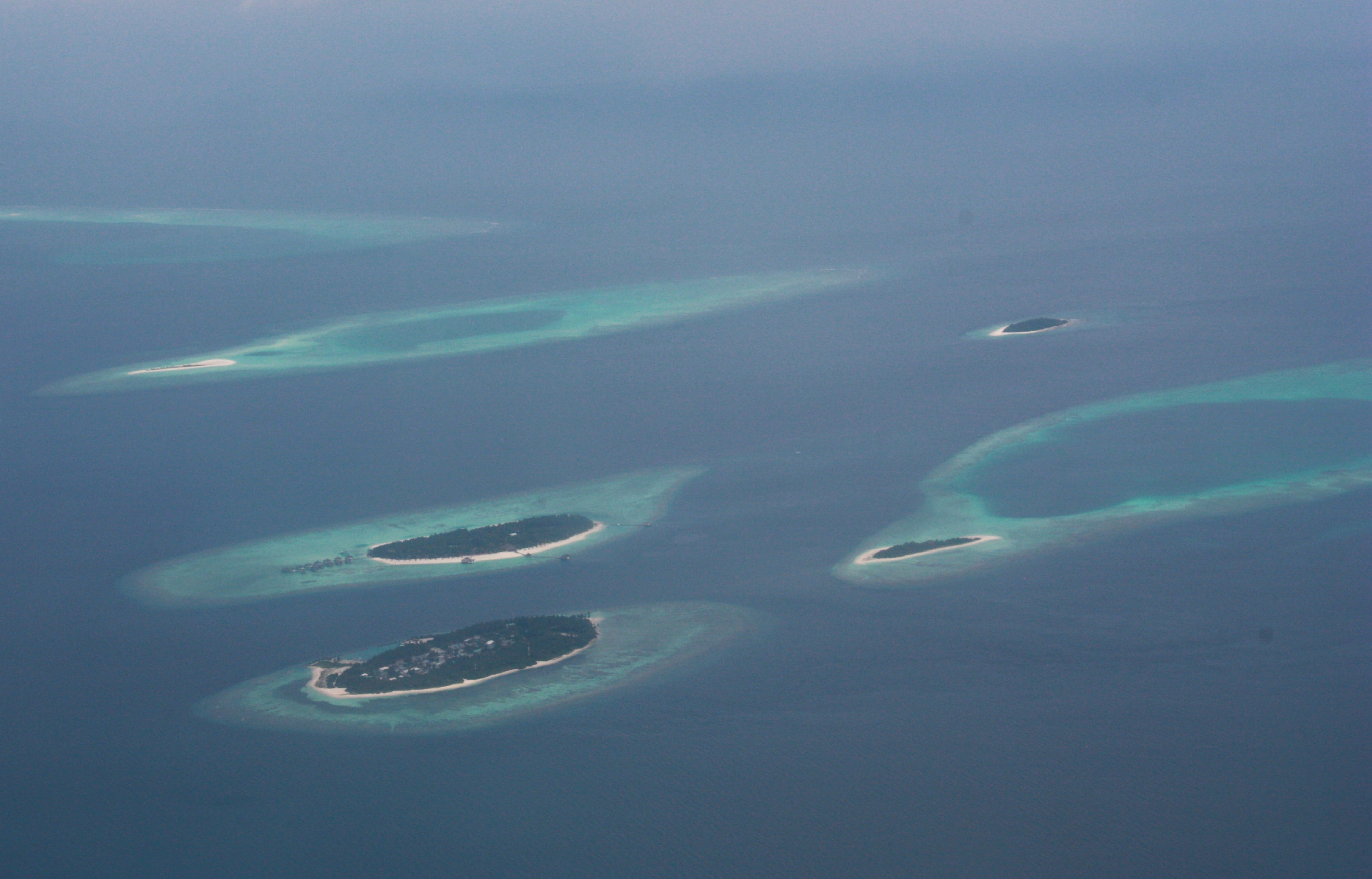
Many of these problems are common to all islands, but the tropics have specific challenges. Plants, particularly weeds, grow faster. Houses designed for the heat allow the abundant animal life easy access, whether it’s house geckos, giant cockroaches and spiders or hundreds of tiny millipedes. From dead birds to buildings, everything decays faster. Tropical islands might offer a slower pace for tourists, but the plant and animal life is almost frenzied in its activity.
I was interested, then, when someone at the Island Invasives conference I attended in February made a passing comment about the difficulty of eradicating rats from tropical islands. In temperate and subantarctic areas, we’ve been successful in eradicating them from some massive islands, including the ship rat and house mouse from the 12,780 hectare Macquarie Island. But, I was told, the largest tropical island where rats had been eradicated was 500 hectares.
I’ve since learned that this isn’t strictly correct. There have been successful eradications on larger tropical islands, but only dry islands, such as the 1020 hectare Hermite Island off Australia’s north-west coast. The fact remains that there have been more failures eradicating rats on tropical islands than on temperate islands, and the largest single wet tropical island where rats (and cats) have been eradicated is the 539 hectare Cayo Centro, part of Banco Chinchorro Biosphere Reserve, which lies east of the Yucatan Peninsula in the Caribbean Sea1.
I wanted to know more, so I made a few enquiries and ended up speaking with Dr Araceli Samaniego. In our first, brief, conversation she tells me that she loves talking about tropical islands and rats. I’m sure we will have plenty to talk about, and indeed when we have a longer conversation, a video call a few weeks later, it runs far longer than I planned and was absolutely fascinating.
Ara didn’t begin her career with the intention of killing rats. She grew up in Mexico, one of the most biologically diverse countries in the world, playing outdoors and exploring nature. Her love of animals led her to a degree in biology then an interest in conservation. She wanted to work with large mammals, but for her Masters degree studied some of Mexico’s native rodents (rats and mice). She studied rodents only because their short life cycle made them easier to study than larger animals, but she grew to love them and appreciate their importance in their natural environments. But her love of rodents would soon take her in an unexpected direction.
Anacapa Island, off the Californian coast, had a unique species of deer mouse, but it also had non-native ship rats, which were devastating the island’s seabirds. Ship rats had to be eradicated to save the seabirds, but without eradicating the deer mouse, because that would mean its global extinction. Her experience with handling rodents during her Masters degree gave her a chance to work as an assistant on the rat eradication.
She tells me that there’s never been any other rat eradication on an island where a unique native rat or mouse needed to be protected. “With an eradication, you usually have to accept that some native animals will die, but in the case of rats and mice it’s likely that all the wild ones are going to die. So the only answer is to take some into captivity.” This sounds drastic, and it is, but careful study of the deer mouse population showed it was feasible. Ara explains: “Anacapa, which is actually three islands, is a seasonal environment. Most of the deer mice naturally die off through winter anyway. The mitigation involved keeping in captivity more or less the same proportion of the population that would have survived the winter naturally, from each of the three islands.”
That became Ara’s job, making sure that the approximately 800 mice they held in captivity survived the winter when poison bait would be spread over the island by helicopter. Once the bait was gone and it was time for the mice to begin breeding in spring, they were released back onto their respective islands. “They did what mice do, they reproduced fast. A few months later, the mouse numbers were even higher than we were expecting, because the rats were gone.”
The Anacapa eradication was the first large-scale rat eradication in the USA, and it involved a large number of experts from both the USA and New Zealand, as well as intensive planning and preparation. It taught the young Ara about the value of studying and really understanding the local environment during the planning of an eradication. “It was hard work, but it was amazing. Doing applied conservation on an inspiring place full of fantastic creatures felt like a dream job.”
When she returned from Anacapa, Ara joined a Mexican conservation organisation, Conservación de Islas which, as its name suggests, works on Mexican islands. Mexico has a lot of coastline and a lot of islands, more than 4000 of them, ranging from remote islands in the eastern Pacific Ocean, to desert islands in the Gulf of California to mangrove-fringed tropical cays off the Yucatan Peninsula in the Gulf of Mexico. On many of these islands, unique and endangered species were being affected by invasive rats and mice – along with other invasives species such as cats and goats.
Ara tells me: “When I started in 2003, this was a very small organisation and no one had much experience. But we were also a bunch of youngsters with lots of energy and no limits in our minds. We took inspiration from what the Kiwis were doing, the experience on Anacapa, the recent successes on small Mexican islands, and we set all Mexican islands as the aspirational goal. I understood that there was a lot of planning and intense fieldwork involved, but had seen what could happen when you did the work properly. Everything thrives, usually better than expected.”
The approach that Ara and her colleagues took to their island eradication work was a blend of research and conservation. Their record speaks for itself. All the 15 invasive rat and mouse eradication projects that they undertook were successful. Seven of these were on tropical islands, including Cayo Centro, which remains the largest rat eradication on a wet tropical island.
The success of Conservación de Islas challenges the idea that tropical island eradications are inherently more difficult. Indeed, Ara has a different perspective. “When you look into the detail of why many projects failed, it’s not because they were tropical islands. In fact, tropical conditions alone rarely explained them. Numerous failures trace back to planning and implementation: inexperienced teams, poor bait coverage, inadequate resources, or operations carried out under unsuitable conditions. That said, tropical islands leave less room for error because bait tends to disappear faster – there are not only more rodents but more bait consumers in general.”
Ara attributes the success of New Zealand’s eradications, as well as those in Mexico, to the experience, mindset and high standards of the teams doing the work. “New Zealand has a permanent team (DOC’s Island Eradication Advisory Group) that is familiar with historical work and issues, has written eradication best practice guidelines and done numerous national and international reviews. All this information is with one group and then they keep advising on projects. It is not surprising that the highest success rates come from teams where knowledge and experience accumulate. Continuity matters because eradications depend heavily on operational detail and experience.”
There’s another point, too, which suggests that comparing the success rates of tropical islands with temperate islands may be misleading. Ara points out that the early days of rat eradication, on islands around New Zealand in the 1970s and 1980s, was a time of trial and error, with successes and failures. “We started decades later in the tropics. The first guidelines for tropical island eradications were developed only ten years ago and, unfortunately, we can’t say that all recent projects have strictly adhered to those recommendations. It’s taking time for teams to fully accept working in the tropics means there is less room for errors.”
There are some aspects of tropical islands, particularly wet islands, which do make eradicating rodents difficult. The first is something I’d never considered but was obvious once it was pointed out. Some tropical islands, such as Cayo Centro, have large areas of mangrove forest. Since mangrove forests are inundated by the tide twice a day (and some are even permanently inundated), you can’t drop pellets of bait on the ground in the area. Ara tells me that they had to attach blocks of bait to the trees. “It was a lot of manual work in addition to the aerial work, but it’s just a case of understanding how much work is needed overall and planning for it.”
Another real issue on tropical islands is the large numbers of animals present. On a wet tropical island, Ara explains, there can be easily 10-15 times more rats than a comparable island off the New Zealand coast. Even more important, she says, is the number of other animals which can eat the bait instead of the rats or mice. “It’s the diversity of animals, but also their abundance.” Ara gives the example of Isabel Island, Mexico, where the first attempt at rat eradication failed. “The first attempt was a ground operation implemented by an inexperienced team in the wet season. Their list of potential contributors to eradication failure didn’t include bait competition by land crabs. But when our team came along years later and studied the system, it became clear that the level of land crab activity in the wet season was a major issue. So for the second (and successful) time, we implemented an aerial operation in the dry season when there were far fewer crabs. It’s key to minimise the number of crabs (and invertebrates in general) eating the bait for the sake of the crabs and the ecosystem, but also to ensure there is bait everywhere – a requisite to achieving eradication. And everywhere means literally everywhere.”
But these and other challenges are manageable. The main cause of eradication failure, from Ara’s perspective, is inadequate planning. “I’m pretty sure that we succeeded in Mexico because we followed the Kiwi advice and best practice. That means investing in quality planning for your specific island and reality. A successful eradication is 90% planning and 10% doing. Working internationally now, I try to bring that same emphasis on preparation to every project.”
Planning is important, Ara explains, because although there is a well-understood method for eradication, every island is different. “The target species matters, the environment matters, the technique matters, the timing matters. But it all starts with understanding the island and its species. In Mexico, when I was explaining this to authorities or donors, I’d tell them we need 2 years to plan an eradication. But once we get to the island with the bait and the helicopter, we’re done in two weeks.”
When planning is taken into account, the reason for the lower success rate in eradicating mice also becomes clearer. In fact, Ara believes that the difficulties are overstated. “For several reported ‘failures’, it turns out that they weren’t actually targeting mice but rats. They either weren’t concerned about the mice, or they didn’t know that the mice were there. You can’t really call that a mouse eradication failure.”
As with tropical islands, Ara says, once you start studying what is needed and planning for it, the picture changes. “Yes rats and mice are a little different, but the same principles apply.”
Perhaps the most important aspect of quality planning is that it isn’t done only on paper. It takes many visits to the island, both to understand the environment and the species (target, non-target, bait competitors), but also to ensure that logistics and permits are sound and everyone involved knows what they are doing. “Staff must be properly trained and ideally very familiar with the island. Then they know where to go for specific tasks, exactly what to do, and are really switched onto the project. By the time you get to the eradication, it’s important no one is distracted by looking at nice beaches.”
Ara makes a compelling point. Tropical islands are extraordinary places, but it’s easy to be distracted by the beauty. The reality is more complex. They can be difficult places to live and work. The plant and animal life may be abundant, but what, exactly, is thriving? Is it the same set of hardy and adaptable species which we have introduced to almost every tropical island around the world? Or unique species found nowhere else? The unique species can thrive, but on many islands this can happen only with successful rodent eradication.


There have been some larger eradications, both in temperate and tropical areas, including the 3500 km2 South Georgia and the 202 km2 Barrow Island off Australia’s north-west coast. However, both of these eradications involved only limited areas of these islands. In South Georgia, rats and mice lived only in some of the ice-free areas which were isolated from one another by glaciers. On Barrow Island, the eradication was done when the rats had only just arrived and hadn’t spread to the whole island.
Fascinating but not surprising to learn how complex non-native rodent eradication can be on wet tropical islands. Congrats on your successes and hope for others to follow your lead! We need to stop losing so many species.
👍 Great to hear about eradication efforts & different challenges elsewhere, and also that the Aotearoa experience helps when taken on board 🤗 Certainly PRINCIPLES of eradication might travel, but even in Aotearoa the specific location & unique features require tweaking & extensive pre-planning every time. Removing a species to a "safe" location has been done in Aotearoa - forget which right now, but endangered bird species down south? 👀🤔